Skip to product information
1 of 1

Cousin

Cousin Tepee 10.2 mm Single Rope

Cousin Tepee 10.2 mm Single Rope

Regular price 60,00€
Regular price Sale price 60,00€
Sale Sold out
Taxes included.
Color
Length
  • Expédition sous 24-48h
  • Retours sous 14 jours
  • Paiement 100% sécurisé

A supple, hard-wearing single rope — from a 20 m gym coil to a 600 m bulk length

Cousin Tepee 10.2 mm: a braided core that stays supple

The Tepee is a 10.2 mm dynamic single rope, and Cousin builds it for the gym as much as for the crag. A fat diameter: easy to get a hand around, and it stands up to constant handling.

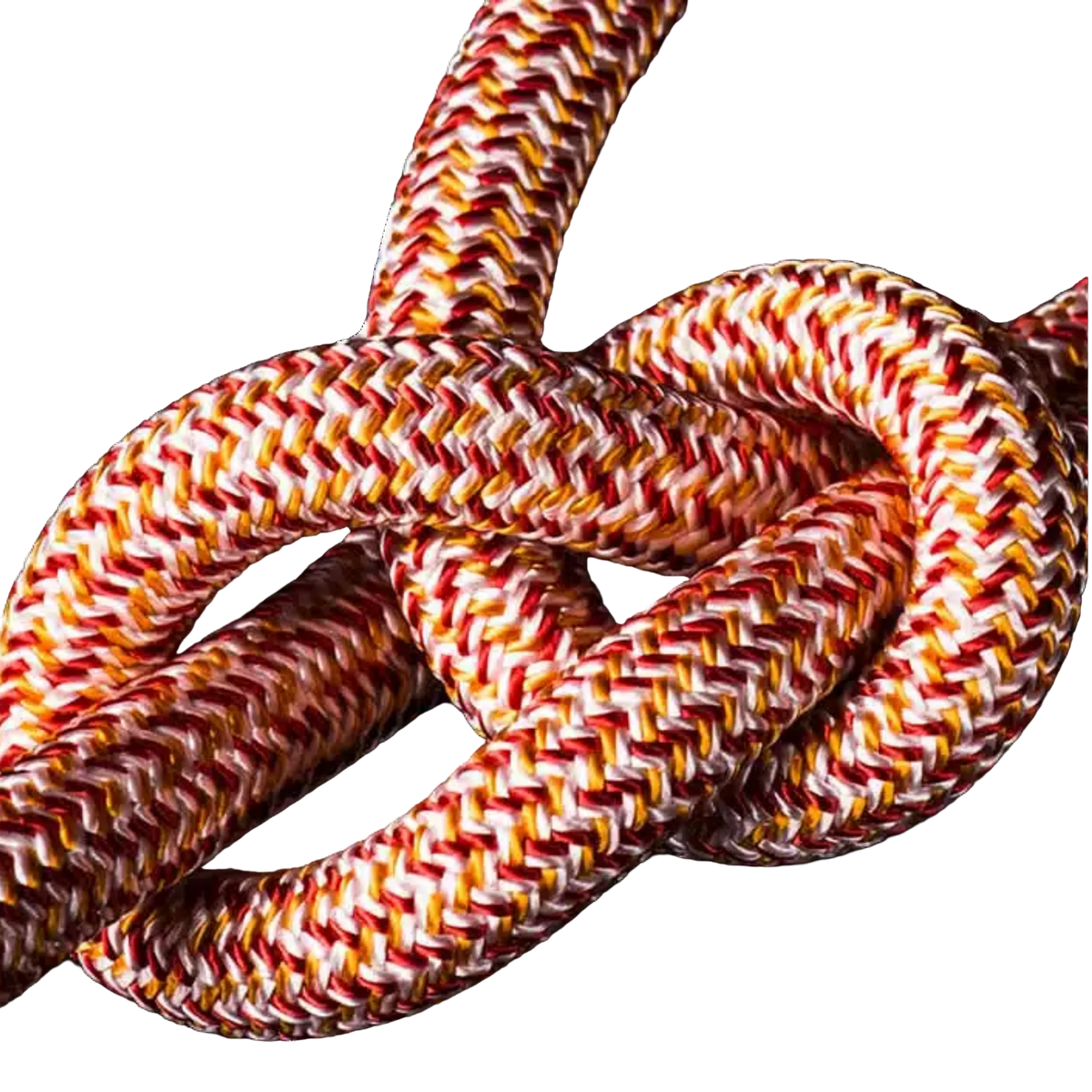
The core is where it differs from most ropes. It's braided — a construction Cousin claims is unique on the market, and credits with a suppleness that holds up over time. The manufacturer describes it as easy to handle and easy to clip, and the knotability measured at 0.93 points the same way: knots go in and come back out without a fight.

Around it, a thick sheath that the manufacturer states resists abrasion better, braided over 32 carriers. The LongLife process impregnates every sheath yarn individually, to slow down dust and moisture working their way in. Cousin presents it as added longevity: the sheath picks up grit more slowly, and the sheath is what protects the core.

The middle mark (MiddleMarking) is there from the factory. That's the reference you want before a rappel, or when you're working out how much rope is left from the anchor.

It's a single rope, and only that. One strand catches the fall. It isn't used in half-rope technique, and it isn't used as twins. The compliance label carries the single-rope pictogram and nothing else.

Nine lengths, two colors (Ocean and Sparkle). From 20 to 70 m in a coil, wound and ready to climb. Beyond that, Cousin makes the Tepee on 100 and 200 m spools and as a bulk length of around 600 m. That's the format for a gym, a club or a community program: you cut the lengths you need and outfit a whole rope fleet.

Cousin is a French rope maker based in the north of France, at Wervicq-Sud, twisting, cabling and braiding fiber since 1848. It carries the French state's Entreprise du Patrimoine Vivant label. The Tepee is certified to EN 892:2012 + A3:2023 under PPE Regulation (EU) 2016/425, supervised by notified body Quintin Certifications (no. 2927).

Why choose the Cousin Tepee 10.2 mm?

  • Dynamic single rope, 10.2 mm, certified to EN 892:2012 + A3:2023
  • Braided core: suppleness that holds up over time, easy to handle and easy to clip
  • Thick LongLife-treated sheath: every yarn impregnated individually against dust and moisture
  • Sheath slippage measured at 0 mm — the standard allows up to 20
  • 6 UIAA falls (standard minimum: 5) · impact force 8.4 kN · dynamic elongation 33.8%
  • Middle mark (MiddleMarking) applied at the factory
  • 72 g/m · 32 sheath carriers · polyamide core and sheath
  • 9 lengths, from 20 m to around 600 m, in 2 colors (Ocean, Sparkle)
  • Cousin, French rope maker since 1848, awarded the Entreprise du Patrimoine Vivant label

Availability and delivery time

We order this rope from Cousin as soon as your order comes in. We confirm the lead time right after, and we tell you if it's going to take longer.

Outfitting a gym, a club or a community program? The 100 and 200 m spools and the bulk length of around 600 m fall under our B2B program: email us at information@shopclimbing.com with your quantities and we'll confirm price, lead time and availability before your order goes through.

View full details
Every product is tested and approved by Mickaël Mawem, bouldering world champion · Trusted by over 1000 climbers

Pourquoi les grimpeurs l'adoptent

1

A braided core that stays supple

Cousin claims a braided core unique on the market, and credits it with a suppleness that holds up over time.

2

Thick LongLife-treated sheath

Every sheath yarn is impregnated individually to slow down dust and moisture, and stretch the rope's life.

3

From 20 m to a 600 m bulk length

Nine lengths in two colors: one rope for you, or enough to outfit the rope fleet of a gym or a club.

Technical specifications
  • Manufacturer reference: 4062
  • Type: dynamic single rope (one strand)
  • Diameter: 10.2 mm
  • Standard: EN 892:2012 + A3:2023 — PPE Regulation (EU) 2016/425
  • Notified body: Quintin Certifications (no. 2927) — EU type-examination certificate no. 2927/0038/136/05/24/0044
  • UIAA falls: 6 (standard minimum: 5)
  • Impact force: 8.4 kN (standard maximum: 12 kN)
  • Static elongation: 5% (standard maximum: 10%)
  • Dynamic elongation: 33.8% (standard maximum: 40%)
  • Sheath slippage: 0 mm (standard maximum: 20 mm)
  • Weight per meter: 72 g/m (Cousin product page)
  • Sheath proportion: 43%
  • Sheath carriers: 32
  • Knotability: 0.93
  • Materials: polyamide (core and sheath)
  • Treatment: LongLife process, yarn-by-yarn sheath impregnation
  • Middle mark: yes (MiddleMarking)
  • Splicable: no
  • Colors: Ocean, Sparkle
  • Lengths: 20, 30, 40, 50, 60 and 70 m in a coil · 100 and 200 m on a spool · around 600 m bulk
  • Manufacturer: Cousin, Wervicq-Sud (Nord), France
  • Documents: user instructions, EU declaration of conformity and inspection record sheet available on request
Size guide / How to use

Which length should you take?

The base rule doesn't change: your rope has to be at least twice the height of the longest route you want to come back down from, with margin on top. Everything else follows from that.

  • 30 to 40 m — the gym. Indoor walls are short, and 30 m covers most of them. Going 40 m leaves margin on the tallest ones, and lets you cut the ends back as they wear instead of retiring the whole rope.
  • 50 m — the middle ground. A sensible first rope if you climb mostly at short crags. Worth checking route by route in the guidebook.
  • 60 to 70 m — the crag. 60 m is still the reference length at most bolted crags. Some routes call for 70 m, and the guidebook always says so.
  • 100 m, 200 m or around 600 m — outfitting a fleet. These formats aren't aimed at the individual climber. They're what a gym, a club or a community program buys to cut its own lengths and replace them as they wear out.

In use

  1. One strand. This is a single rope: no half-rope technique, no twins.
  2. A stopper knot in the end, every time. Cousin also points out that a knot can cut the rope's initial strength in half: that's normal, and the standard accounts for it.
  3. Find the middle mark before every rappel and every long lower.
  4. Go easy on fast lowers and constant top-roping. Cousin warns about it explicitly: they burn the rope and speed up wear. Alternate which end takes the wear, and rotate the ropes you have in service.
  5. Frost and moisture. Wet or frozen, a rope gets more sensitive to abrasion and loses some of its initial strength. Let it dry in the shade, in open air.

Care and service life

A rope swells with use and can shrink by up to 5%: check the real length now and then, because a 60 m rope you bought three years ago isn't necessarily 60 m anymore. Cousin asks for a periodic inspection at least once every 12 months from the date of first use; the inspection record sheet supplied with the rope is there to log it.

Wash in clean water, dry in the shade, store dry and away from light and chemicals. For retirement criteria and service life, refer to the Cousin instructions supplied with the rope.

FAQ

Can it be used as a half rope or as twins?

No. The Tepee is certified as a single rope and nothing else: one strand catches the fall. It isn't used in half-rope technique and it isn't used as twins. Those uses need a rope certified for them.

What length for the gym, and what length for the crag?

In the gym, 30 m covers most walls and 40 m gives you margin. At the crag, 60 m is the reference length, 70 m at the crags that call for it. Either way, the rope has to be at least twice the height of the route you're coming back down from.

What does the LongLife treatment actually do?

It impregnates every sheath yarn individually, to slow down dust and moisture working their way in. Cousin presents it as a longevity argument. The Tepee carries no water-absorption certification under EN 892, though: for ice or for snowy alpine terrain, pick a rope that states that certification explicitly.

Will it run in my belay device?

That's decided by your device's diameter range, not by the rope. The device manufacturer states it, on the product and in its instructions. 10.2 mm is a common diameter, but several recent devices are built around thinner ropes: check before you order.

What's the middle mark for?

Spotting the middle of the rope at a glance, above all before a rappel, or to judge from the anchor how much rope is left. Cousin applies it at the factory. It fades with use: never rely on it alone, and keep a stopper knot in the end.

Can I order a spool or bulk length to outfit a gym?

Yes. The 100 and 200 m spools and the bulk length of around 600 m fall under our B2B program. Email us at information@shopclimbing.com with your quantities: we confirm price, lead time and availability with Cousin before anything goes through.

Shipping & returns

Lead time

We order this rope from Cousin as soon as your order comes in. We confirm the lead time right after, and we tell you if it's going to take longer.

Bulk orders

Gym, club, community program: the 100 and 200 m spools and the bulk length of around 600 m fall under our B2B program. Email us at information@shopclimbing.com with your quantities and we'll confirm price, lead time and availability before your order goes through.

Returns

Returns accepted within 14 days, product new and unused, in its original packaging with its instructions and its inspection record sheet. Since this is personal protective equipment, a rope that has been used can't be returned. A length cut from a spool or from bulk is a made-to-order item and can't be taken back.

En savoir plus

What length of climbing rope should you buy?

It's the question that stalls the order, and it has a simple answer: your rope has to be at least twice the height of the longest route you want to come back down from, plus margin. The rest is case by case.

In the gym: 30 or 40 m. Indoor walls are short, and 30 m covers most of them. Going 40 m isn't overkill: it leaves margin on the tallest walls and, above all, it lets you cut the rope back from the ends — which wear first — without retiring it.

At the crag: 60 m, sometimes 70. 60 m is still the reference length at most bolted crags. Some routes call for 70 m, and the guidebook always says so. When in doubt, a 70 m rope only costs you weight and space in the pack.

Between the two: 50 m. A sensible choice for a first rope if you climb mostly at short crags, worth checking route by route.

And the 100 or 200 m spools, the 600 m bulk length? Those formats aren't aimed at the individual climber. They're what a gym, a club or a community program buys to outfit its rope fleet: you cut the lengths you need, replace them as they wear, and manage a single product instead of a dozen.

Two habits, whatever length you land on. A stopper knot in the end, every time: that's what catches you the day the rope is too short for the lower. And a real-length check season after season: Cousin points out that a rope swells with use and can shrink by up to 5%. A 60 m rope you bought three years ago isn't necessarily 60 m anymore.

That leaves the diameter. At 10.2 mm, the Tepee plays robustness and hand feel rather than weight: it's a diameter for a rope that gets used often, on plastic and on limestone, and that takes the abrasion of top-rope laps and repeated clipping. But your belay device has the last word: its diameter range, stated by the device manufacturer, decides what you can run through it. Check it before you order.

Our ropes and our belay devices are gathered in the belay gear and ropes collection.