Skip to product information
1 of 2

Beal

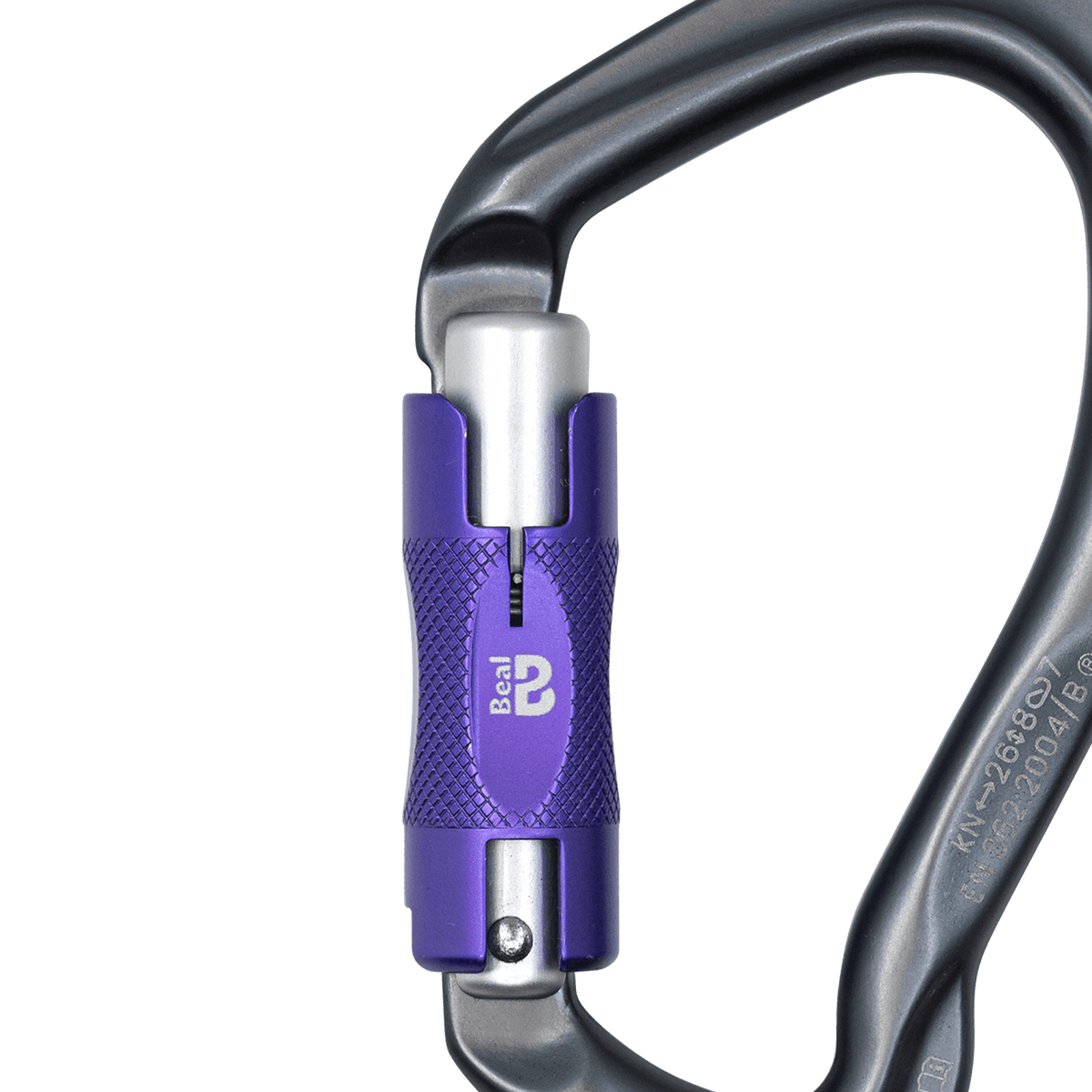
Beal Be Link Bi-Matic Locking Carabiner

Beal Be Link Bi-Matic Locking Carabiner

Regular price 14,90€
Regular price Sale price 14,90€
Sale Sold out
Taxes included.
Couleur
  • Expédition sous 24-48h
  • Retours sous 14 jours
  • Paiement 100% sécurisé

Double-action auto-locking gate, for lanyard ends and anchors

Beal Be Link Bi-Matic: the auto-locking carabiner for your static connections

The Be Link Bi-Matic is an asymmetric climbing carabiner with a double-action auto-locking gate: the gate shuts and locks on its own, no extra move from you. The half-closed sleeve, the classic mistake on a screw-lock carabiner, can't happen here.

Its asymmetric shape points it at two jobs: clipping the end of your lanyard, and building an anchor. The body stays oriented on its own, and the 20 mm gate opening drops over a ring or an anchor point without a fight. The Keylock nose keeps it from snagging going in or coming out. Beal says it handles easily even with gloves on.

On strength: 26 kN on the major axis with the gate closed, 7 kN gate open, 8 kN on the minor axis. All of it at 77 g, in aluminum.

A carabiner for static connections only

This is the thing to know before you buy it. Beal limits the Be Link Bi-Matic to three situations: the end of a lanyard, building an anchor, and connecting parts of the belay chain that aren't in contact with the rope. In other words, connections where no rope runs through the carabiner.

It must not be used where a rope runs through the carabiner: the friction can cause it to open accidentally. Those jobs call for a triple-action auto-locking carabiner. If you're unsure about a setup — clipping a belay device, for instance — check whether the rope ends up rubbing inside the carabiner, and read the instructions for your device.

It's certified EN 12275:2013 class B, the standard for mountaineering and climbing connectors, and EN 362:2004 class B, the standard for connectors used as protection against falls from a height. In both, class B means a basic connector for general use. CE marked under Regulation (EU) 2016/425 on PPE. Made by Beal, a French manufacturer based in Isère, France, since 1951.

Why choose the Beal Be Link Bi-Matic?

  • Double-action auto-locking gate: the gate shuts and locks on its own, nothing left to screw down
  • Asymmetric shape: sits right at the end of a lanyard and at the anchor
  • Keylock nose: clips and unclips without snagging
  • 26 kN major axis, gate closed · 7 kN gate open · 8 kN minor axis
  • 20 mm gate opening · 77 g · aluminum
  • Handles with gloves on
  • Keep it to connections where no rope runs: past that, you need a triple-action auto-lock
  • Certified EN 12275:2013 class B and EN 362:2004 class B, sport and professional use
  • Beal, French manufacturer since 1951

Availability and delivery time

We order this carabiner from Beal once your order comes in. Count on 5 to 10 business days in most cases, depending on what the manufacturer has on hand.

Outfitting a gym, a club or a community program? Email us at information@shopclimbing.com and we'll confirm the exact lead time and availability before your order goes through.

View full details
Every product is tested and approved by Mickaël Mawem, bouldering world champion · Trusted by over 1000 climbers
Mickaël Mawem, champion du monde de bloc

L'avis de Mickaël Mawem

Champion du monde de bloc — teste et valide chaque produit shopclimbing

Un mousqueton simple, qui fonctionne très bien avec le système d'assurage. Très durable et résistant.

Pourquoi les grimpeurs l'adoptent

1

Locks itself, every time

Two stages and the gate is shut and locked — there's no sleeve left to forget.

2

Built for lanyards and anchors

Asymmetric shape, 20 mm gate opening and a Keylock nose: it sits right and it handles with gloves on.

3

26 kN at 77 g

Aluminum, 26 kN on the major axis with the gate closed: margin to spare without loading up your harness.

Technical specifications
  • Manufacturer reference: BMCLBLN2.GYP
  • Type: asymmetric carabiner with a double-action auto-locking gate
  • Intended uses: end of a lanyard, building an anchor, connecting parts of the belay chain that are not in contact with the rope
  • Usage restriction: do not use where a rope runs through the carabiner — that calls for a triple-action auto-lock
  • Standards: EN 12275:2013 class B · EN 362:2004 class B
  • Marking: CE, Regulation (EU) 2016/425 on PPE
  • Sport use: yes · professional use: yes
  • Major axis strength, gate closed: 26 kN
  • Major axis strength, gate open: 7 kN
  • Minor axis strength: 8 kN
  • Gate opening: 20 mm
  • Weight: 77 g
  • Material: aluminum
  • Nose: Keylock system
  • Manufacturer: Beal, France
  • Documentation: connector instructions for use (03/2024 edition) and EU declaration of conformity available on request
Size guide / How to use

Where to use it

The Be Link Bi-Matic is a connector for static connections. Beal gives it three jobs: the end of a lanyard, building an anchor, and connecting parts of the belay chain that are not in contact with the rope. It must not be used where a rope runs through the carabiner: the friction can cause it to open accidentally. Those jobs call for a triple-action auto-lock.

A carabiner only reaches its rated strength closed, fully locked and loaded along its major axis. Make sure nothing is stopping it from closing and locking: dirt, grit, snow, ice.

Check before every use

  1. Check that no part shows a crack, deformation, excessive play, a sharp edge, corrosion or a wear mark 1 mm deep or more.
  2. Check that the gate opens and closes automatically and fully.
  3. Check the condition and the action of the locking element.

Beal asks for a thorough inspection by a competent person at least once a year, and more often depending on how the carabiner is used. Retire the carabiner if any of these apply:

  • it has taken a fall or a hard impact, even with no visible damage
  • it has been in contact with chemicals
  • it has been exposed to more than 80 °C
  • its history is unknown
  • its markings can no longer be read
  • there is any doubt at all about its safety

Care

Wash it in clean cold water (30 °C maximum), ideally with a mild soap, then rinse in clean water. No washing machine, no pressure washer. Wipe it with a clean, non-abrasive cloth and let it dry away from direct heat. Add a silicone-based lubricant to the moving parts. After contact with salt water, wash and lubricate it straight away.

Storage and lifespan

Store it away from light, damp, dust and chemicals, at around 20 °C. There is no time limit on the lifespan of metal products, but a carabiner can be finished on its first outing: only inspection tells you whether it can stay in service.

FAQ

Double-action or triple-action: which one do I need?

A double-action auto-lock shuts and locks on its own, in two moves — fast and intuitive. It suits connections where no rope runs: the end of a lanyard, an anchor. As soon as a rope runs through the carabiner, the friction can act on the sleeve and open it, and that's where a triple-action auto-lock belongs.

Can I clip my belay device to it?

Beal allows it to connect parts of the belay chain that are not in contact with the rope. Depending on the device and the setup, the rope can end up rubbing inside the carabiner itself — and then this isn't the right carabiner. Check your setup and read the instructions that came with your belay device.

Is it suitable for via ferrata?

No. Via ferrata calls for class K connectors under EN 12275. The Be Link Bi-Matic is a class B connector, meaning a basic one for general use.

What do EN 12275 class B and EN 362 class B mean?

EN 12275:2013 is the standard for connectors used in mountaineering, climbing, caving and via ferrata; EN 362:2004 is the one for connectors used as protection against falls from a height, for work at height. In both, class B means a basic connector for general use. This carabiner meets both, which is why it covers sport and professional use.

How long does it last?

There is no time limit on the lifespan of metal products, but it depends entirely on how the carabiner is used, stored and cared for. A carabiner can be out of service from its first outing — after a fall or a hard impact, for instance. Only the check before use, and the yearly inspection by a competent person, settle it.

Can I order these in quantity for a gym or a club?

Yes. Email us at information@shopclimbing.com with the quantities you need: we'll confirm lead time and availability with Beal before your order goes through.

Shipping & returns

Lead time

We order this carabiner from Beal once your order comes in. Count on 5 to 10 business days in most cases, depending on what the manufacturer has on hand. We'll let you know if it's going to take longer.

Bulk orders

Gym, club, community program: email us at information@shopclimbing.com. We'll confirm the exact lead time and availability before your order goes through.

Returns

Returns accepted within 14 days, product new, unused, in its original packaging with its documentation. Since this is personal protective equipment, no return is possible on a carabiner that has been used.

En savoir plus

Which climbing carabiner should you pick for the job?

A locking carabiner is chosen on what you're going to do with it, not on its spec sheet. Three questions narrow it down.

Is a rope going to run through it? That's the most important question and the one people ask least. A carabiner with a double-action auto-locking gate shuts and locks on its own in two moves: fast, intuitive, no sleeve left half done. The trade-off is that it stays with static connections — the ones where the rope doesn't move inside the carabiner. As soon as a rope runs through, repeated friction can act on the sleeve and cause it to open accidentally, and that's the territory of the triple-action auto-lock. The screw-lock carabiner runs into the same limit: you lock it by hand — screwed all the way down, no thread showing — and a running rope can act on that same sleeve. Beal goes as far as advising against a screw-lock for clipping a belay device: the instructions for its Air Force devices call for a locking carabiner, loaded along its major axis, gate closed. Before you pair a screw-lock with yours, read the instructions that came with it.

Which shape? An asymmetric shape like the Be Link Bi-Matic's stays oriented on its own at the end of a lanyard and at the anchor. A pear shape, the HMS, is built to work with a Munter hitch. A symmetric shape goes with pulleys and aid climbing. Those families line up with the classes in EN 12275: B for general use, H for the pear, K for via ferrata, X for the symmetric one.

Which standards? A climbing carabiner falls under EN 12275:2013 (mountaineering, climbing, caving, via ferrata). A connector meant for work at height falls under EN 362:2004. Some models, the Be Link Bi-Matic among them, meet both, which opens up sport use and professional use. In both standards, class B means a basic connector for general use.

And weight? It counts mainly when you carry a lot of them. For one or two carabiners on the harness, handling matters more, along with the gate opening — 20 mm on this one — and how easy it is to work with gloves or cold hands. A Keylock nose keeps it from hanging up as you clip and unclip.

Either way, you only get the rated strength with the carabiner closed, locked and loaded along its major axis. To round out your belay chain, take a look through our belay gear and ropes.