
Skip to product information
1 of 1

Beal

Beal Air Force 3 Belay and Rappel Device

Beal Air Force 3 Belay and Rappel Device

Regular price 24,80€
Regular price Sale price 24,80€
Sale Sold out
Taxes included.
Coloris
  • Expédition sous 24-48h
  • Retours sous 14 jours
  • Paiement 100% sécurisé

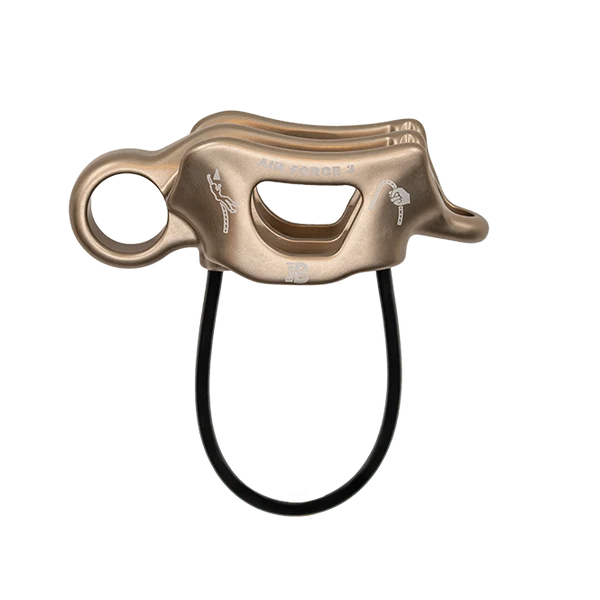
The multi-pitch belay device: four grooves, two strands, guide mode at the anchor

Beal Air Force 3 belay and rappel device: built for the anchor

Beal doesn't hedge on this one: the Air Force 3 is built for the anchor. Once the leader is set up at the top of the pitch, the device clips to the anchor by its large metal eye and brings up one or two followers from above. It also belays the leader, device on your belay loop, and it takes you back down on rappel: those are the three uses the manual describes, and there are no others. Beal rates the product Expert.

A manual braking device

The Air Force 3 is certified to EN 15151-2:2012, the part of the standard that covers manual braking devices, with no assisted braking. In practice, the manual asks for two things. The free end of the rope stays under control in your brake hand the whole time you're belaying, and both strands are held on the braking side. Beal also points out that braking efficiency isn't a fixed property of the device: it depends on the diameter, friction, suppleness and moisture content of the rope, on the cross-section of the carabiner, and on the skill and grip strength of whoever is belaying.

There is exactly one case where the device locks: in guide mode, clipped to the anchor, belaying one or two followers from above. Set up correctly, it's designed to lock if a follower falls. That locking has limits, and Beal writes them down in black and white: it can be defeated if the ropes cross, and if one of the two followers is hanging on their rope, the device won't lock on the other one's rope. Two followers on one device is not two independent belays. Locking is also reduced with frozen ropes, and a device that's set up wrong doesn't lock at all.

Four grooves, two strands, 7.3 to 10 mm

The Air Force 3 has four grooves, two of them V-shaped. It takes a single rope as well as two half ropes or two twin ropes, from 7.3 to 10 mm. The two V-grooves are there to pay out slack easily, control the braking and make the most of energy absorption when the climber falls. Wide and smooth, the grooves keep unwanted friction off the edges and hold rope wear down.

The small release hole answers the classic problem with belaying from above: a follower hanging, ropes loaded, and nothing sliding anymore. You thread a sling or a piece of cord through it and use that as a handle, keeping a firm grip on the rope. Beal is clear that the release hole is never to be used for anything else.

89 g, aluminum, individual number

The device weighs 89 g, aluminum body. That's what four grooves and an eye to hang it at the anchor cost you, where a plain single-rope tube like the Air Force 1 comes in at 43 g. These aren't two versions of the same product: the Air Force 1 belays on a single rope, the Air Force 3 is the multi-pitch device — two strands, at the anchor and on rappel. One doesn't replace the other.

Every device carries an individual number for traceability: handy for following your own gear over the years, and just as handy for running a club's inventory. Beal states an unlimited lifespan as long as there's no reason to retire the device.

Why choose the Beal Air Force 3 belay device?

  • Built for the anchor: large metal attachment eye and guide mode to belay one or two followers from above
  • Four grooves, two of them V-shaped: a single rope, two half ropes or two twin ropes, from 7.3 to 10 mm
  • Release hole: free the ropes even under load, with a sling or a piece of cord
  • Wide, smooth grooves: less unwanted friction, less rope wear
  • EN 15151-2:2012: manual braking device, no assisted braking
  • 89 g · aluminum · individual number for traceability
  • Expert level: multi-pitch, alpine climbing, outdoor climbing, big wall, canyoneering
  • Beal, French manufacturer since 1951

Availability and delivery time

We order this one from Beal as soon as your order comes in. Figure 5 to 10 business days, depending on what the manufacturer has on hand.

Outfitting a club, a gym or a community program? Email us at information@shopclimbing.com and we'll confirm the exact lead time and availability before your order goes through.

View full details
Every product is tested and approved by Mickaël Mawem, bouldering world champion · Trusted by over 1000 climbers

Pourquoi les grimpeurs l'adoptent

1

Built for the anchor

A large metal attachment eye and guide mode to belay one or two followers from above.

2

Single, half or twin ropes

Four grooves, two of them V-shaped, for a single rope or for two strands from 7.3 to 10 mm.

3

Release under load

The dedicated hole frees loaded ropes, with a sling or a piece of cord as a handle.

Technical specifications
  • Manufacturer reference: BMDAF3.SP
  • Type: belay and rappel device, guide mode at the anchor
  • Standard: EN 15151-2:2012 — manual braking device, no assisted braking
  • Ropes accepted: a single rope, two half ropes or two twin ropes
  • Diameters: 7.3 to 10 mm
  • Grooves: four, two of them V-shaped
  • Release hole: yes, for a sling or a piece of cord
  • Anchor attachment: large metal eye
  • Weight: 89 g
  • Material: aluminum
  • Traceability: individual number on every device
  • Level stated by Beal: Expert
  • Uses stated by Beal: multi-pitch, alpine climbing, outdoor climbing, big wall, canyoneering
  • Lifespan: unlimited as long as there's no reason to retire it
  • Color: Matt Stone
  • Manufacturer: Beal, France
  • Documents: Beal user manual, available on request
Size guide / How to use

Rope compatibility

Beal states the Air Force 3 for ropes from 7.3 to 10 mm: a single rope, two half ropes or two twin ropes. The manufacturer points out that braking efficiency isn't a fixed property of the device: it depends on the diameter, friction, suppleness and moisture content of the rope, on the cross-section of the carabiner, and on the skill and grip strength of whoever is belaying. Take the time to feel how it runs with your own ropes before you commit to a multi-pitch. Beal also recommends wearing gloves, especially on skinny ropes — and the Air Force 3 goes down to 7.3 mm.

The right carabiner

A locking carabiner that suits the device, loaded along its major axis, gate closed. Beal advises against a screw-lock carabiner: the rope can cause it to open. Guide mode takes two — one to clip the device to the anchor by its large eye, one for the bights of rope and the cable.

The device's cable is only there to hold it in place — it has no strength rating and must never be used as an anchor point.

The three uses described in the manual

  1. Belaying the leader, device on your belay loop.
  2. Belaying one or two followers from above, device clipped to the anchor by its large eye (guide mode).
  3. Rappelling, with a backup system (a Prusik) placed about 20 cm below the device.

The manual adds that you can belay a follower off your belay loop in the standard way, as long as the rope is redirected through a quickdraw placed above the belay device.

In every case your hand never leaves the rope, and both strands are held on the braking side. Locking at the anchor assumes a device that's set up correctly: set up wrong, it doesn't lock. It's also reduced with frozen ropes, and it no longer works on one follower's rope when the other is hanging on theirs.

Releasing loaded ropes

Thread a sling or a piece of cord through the small release hole and use it as a handle, keeping a firm grip on the rope. Beal is clear that the release hole is never to be used for anything else.

Care and lifespan

On rappel, control your speed on the way down so the device doesn't overheat. Beal states an unlimited lifespan as long as there's no reason to retire the device: the retirement criteria and the checks to run are in the manual, which is worth reading before the first use. The individual number on every device lets you follow its history.

FAQ

Is the Air Force 3 an auto-locking belay device?

No. It falls under EN 15151-2:2012, the standard for manual braking devices, with no assisted braking. Belaying the leader or rappelling, the free end of the rope has to stay under control in your brake hand at all times. The only case where the device locks is guide mode: clipped to the anchor, belaying one or two followers from above.

Can it belay two followers at once?

Yes, that's what Beal built it for: at the anchor, in guide mode, on two strands. But the two belays aren't independent. The manual is explicit: if the ropes cross, or if one of the two followers is hanging on their rope, the device won't lock on the other follower's rope. That's a detail to have straight before you head out as a party of three.

Which ropes can I use with it?

A single rope, two half ropes or two twin ropes, from 7.3 to 10 mm, which is the range Beal states. The four grooves, two of them V-shaped, cover those three setups.

How is it different from the Air Force 1?

Two different devices, not two versions of the same one. The Air Force 1 is a tube with a single V-groove for a single rope, 43 g, which Beal rates for all levels. The Air Force 3 has four grooves and takes two strands, adds guide mode at the anchor and a release hole, weighs 89 g, and is rated Expert by Beal. The first one covers belaying in the gym and at the crag, the second one the multi-pitch team.

Which carabiner should I use with the Air Force 3?

A locking carabiner, loaded along its major axis, gate closed. Beal specifically advises against a screw-lock carabiner, because the rope can cause it to open. Plan on two if you intend to use guide mode at the anchor.

Can I rappel on it?

Yes, that's one of the three uses the manual describes. Beal asks for a backup system (a Prusik), placed about 20 cm below the device so it can't come into contact with it, and for controlling your speed on the way down so the device doesn't overheat.

What's the small hole on the device for?

Releasing the ropes, even under load. You thread a sling or a piece of cord through it and use it as a handle, with the rope still held firmly in your other hand. Beal is clear that it's never to be used for anything else.

Shipping & returns

Lead time

We order this belay device from Beal as soon as your order comes in. Figure 5 to 10 business days, depending on what the manufacturer has on hand. If it's going to take longer, we'll tell you.

Bulk orders

Club, gym, community program: email us at information@shopclimbing.com. We'll confirm the exact lead time and availability before your order goes through.

Returns

Returns accepted within 14 days, product new, unused, in its original packaging with its documents. Since this is personal protective equipment, no return is possible on a device that has been used.

En savoir plus

How do you choose a belay device for multi-pitch?

In the gym or on a single-pitch sport route, the question settles itself fast: one single rope, one device, one partner. On a multi-pitch route the problem changes shape. There are often two strands instead of one, an anchor to manage, one or two followers to bring up, and a string of rappels to get back down. The device has to cover all of that, not just belaying the leader.

The ropes the device takes. That's the first filter. A single-groove tube is built for one single rope. As soon as you move to two half ropes or two twins — for longer rappels, or to cut rope drag on a line that wanders — you need a device with several grooves, able to run thinner diameters. The Air Force 3 lists four, over a 7.3 to 10 mm range.

Belaying from the anchor. Bringing a follower up with the device on your belay loop means redirecting the rope through a quickdraw placed above the device. Guide mode skips the detour: the device clips straight to the anchor and, set up correctly, it's designed to lock if the follower falls. What's left is knowing exactly what that locking covers. With two followers on two strands it isn't independent: Beal states that if one of them is hanging on their rope, the device no longer locks on the other one's rope.

Releasing under load. A follower hanging in space, and the rope stops sliding. A dedicated release hole, with a sling or a piece of cord through it, gives you a handle to free the ropes without improvising, rope still held firmly in hand.

Manual braking or assisted braking. Two families, two parts of the same standard: EN 15151-1 for assisted braking devices, EN 15151-2 for manual braking devices. The Air Force 3 falls under the second. It gives you no help locking off while you belay the leader or while you rappel: your brake hand never leaves the free strand. That fits the Expert level Beal puts on it, a device meant for climbers who already have their anchor work dialed.

Weight. It counts on a long day, but it comes after the four criteria above: 89 g for the Air Force 3, against around forty grams for a single-rope tube. That's the price of four grooves, an anchor eye and a release hole.

To compare devices and ropes, have a look at our belay gear selection.