


Manual or assisted braking: which belay device should you pick?
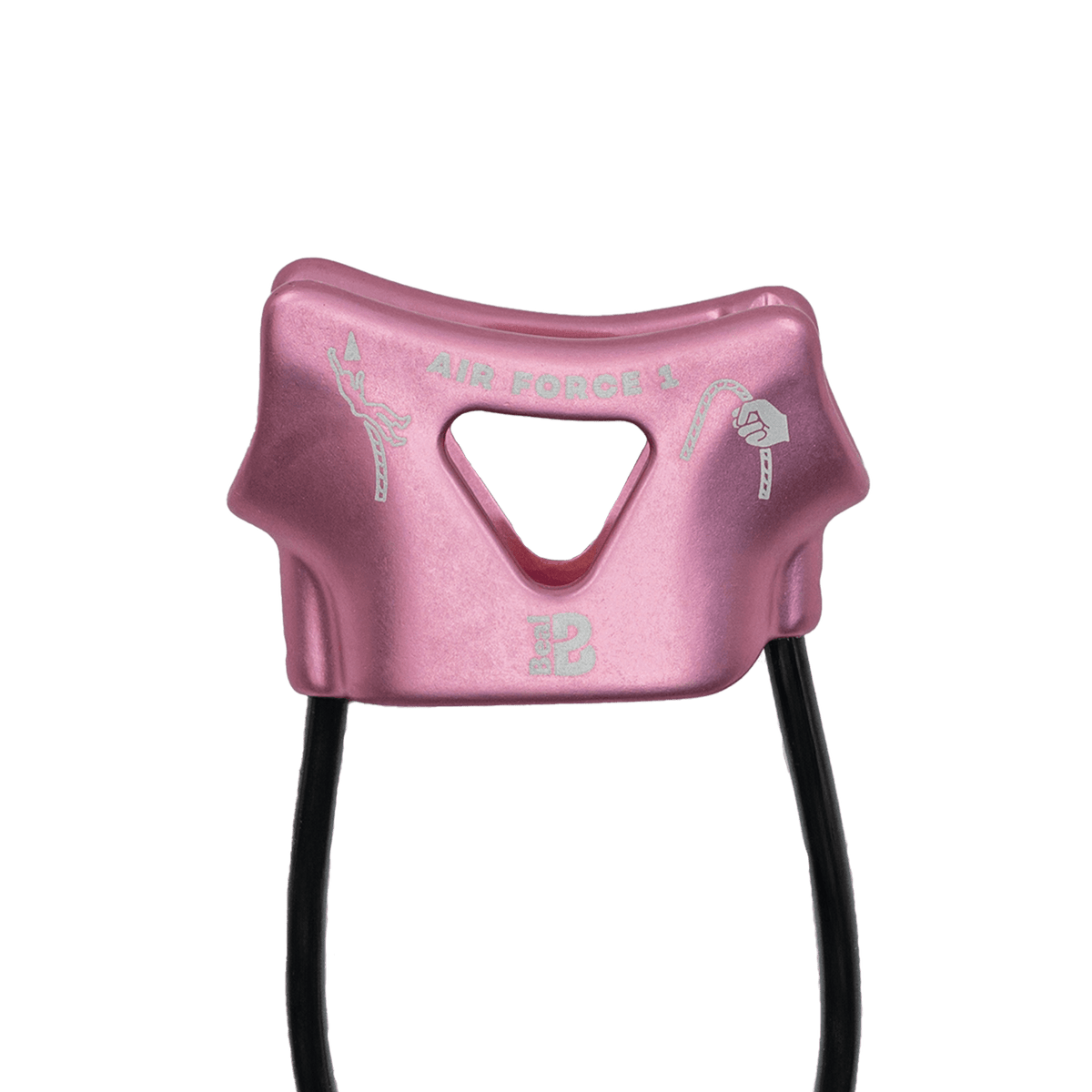
That's the first question you ask yourself standing in front of a wall of belay devices, and it deserves more than a one-line answer. The European standard EN 15151 covers braking devices for climbing and mountaineering, and its part 2 is the one for manual braking devices. The Beal Air Force 1 sits in that part 2: your hand does the braking, first meter to last.
What that means in practice. You never let go of the brake strand. The device creates friction and multiplies what your hand can do, but the fall is held by the hand pulling the brake strand down. Beal spells it out in the instructions: how well the device brakes depends on the diameter of the rope, how supple it is, how much friction it has, how damp it is, the cross-section of the carabiner and the user's grip strength. Hence the advice to test the braking with your own rope before you commit to it — two ropes of the same diameter but at different stages of their life don't behave the same.
What you get for it. A manual braking device is light and has no moving parts, and it does more than belay: Beal rates the Air Force 1 for rappelling too, in climbing and in mountaineering. For anyone splitting time between the gym, the crag and days in the mountains, that's one device that covers everything, for 43 g hanging off the harness.
The diameter range matters more than you'd think. A device that's too open for a skinny rope brakes poorly; too tight for a fat rope, it pays slack out in jerks. The Air Force 1 takes single ropes from 8.5 to 10.5 mm, which covers nearly everything a climber runs today: the skinny workhorse rope on a crag project as much as the 10 mm gym rope that's already seen a few seasons.
And rope wear? That's the point almost nobody checks at purchase and pays for later. The slot of the Air Force 1 is wide and smooth: less friction when the rope runs at an angle, less wear. Coming from a ropemaker, that attention to detail is no surprise.
An assisted braking device answers other needs, especially on long top-rope working sessions. The two families live happily in the same pack. To compare them, have a look through our full range of belay devices.